
Chinese Cities Do Not Have Only Baozi and Soy Milk for Breakfast
Look at breakfast and a city starts to show its climate, local produce, work rhythm, and taste.
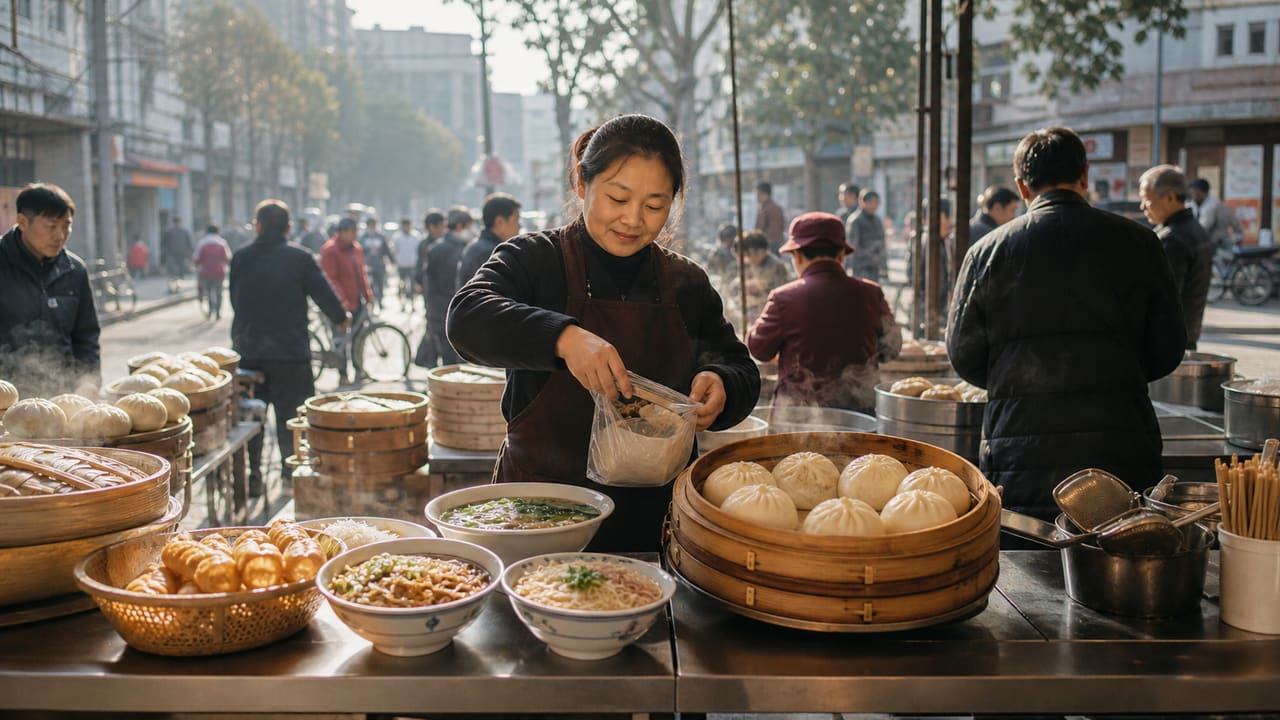
Breakfast at a Chinese hotel often includes baozi, congee, eggs, and soy milk. On the street, the choices suddenly become more complicated: people in Wuhan carry hot dry noodles called “Guo Zao” (a Wuhan dialect expression meaning “eating breakfast”), teahouses in Guangzhou fill their tables with bamboo steamers, small shops in Xi’an sell meatball-and-pepper soup early in the morning, and many cities in Guangxi and Hunan begin the day with a bowl of rice noodles.
Chinese breakfast is difficult to summarize with one fixed menu. It is more like a map of local life. Staple foods depend on local produce, flavors are shaped by climate and migration, and ways of eating change along with the rhythm of the city.
The North-South Divide Is More Than Rice and Wheat
Wheat is abundant in the north, so wheat-based foods naturally appear often at breakfast. Mantou, baozi, shaobing, youtiao, and different noodle soups can provide a quick, filling meal. But “northern breakfast” does not have one flavor: Tianjin’s jianbing guozi emphasizes mung-bean batter and a crisp fried cracker, Beijing’s douzhi has a fermented sour taste, and an Xi’an breakfast may be heavy on spices or simply be a bowl of noodles.
Rice is abundant in the south, where rice noodles, rice vermicelli, congee, and glutinous-rice foods are more common. Wuhan’s hot dry noodles are called noodles but come with a rich sesame sauce; Changsha rice noodles may look light, while the toppings and chilies give them their personality; and Cantonese morning tea puts shrimp dumplings, shumai, rice noodle rolls, and tea into a slower social period.
These patterns help with understanding but are not boundaries. The shaobing and youtiao in a Shanghai breakfast are wheat foods, Guangxi also has baozi, and northern cities have congee and rice noodles too. Chinese cities have long received new residents, and breakfast shops bring different regional tastes onto the same street.
Why Must Many Breakfasts Be Eaten on the Street?
Traditional breakfast businesses depend on being early, fast, and close. Vendors begin kneading dough, simmering soup, or grinding soybeans before dawn. Commuters buy food at subway entrances and community gates and leave with it. Some foods taste best right after cooking and are not easy to make in small quantities at home: youtiao needs a pot of hot oil, rice noodle rolls are steamed to order, and doupi is spread and fried on a large iron pan.
The shop does not need to be elegant. Plastic stools, small tables, and an open kitchen let customers see how the food is made. A shop may sell only two or three items and still have been doing so for decades. Regulars do not need a menu; once they sit down, they know what to order.
For foreign visitors, a breakfast shop is one of the easiest places to observe a city. There is none of a banquet’s formality and little of the staged feeling of a tourist-area restaurant. People are simply eating a hot bite before work, taking children to school, or shopping for groceries.
How Can One City Have Dozens of Breakfasts?
Many Chinese cities are transport and migration hubs. Wharves, railways, factories, and universities brought people from different regions and brought new ways of eating with them. In the past, Wuhan’s three towns were busy commercial areas, and “Guo Zao” developed into a rich snack system; Shanghai absorbed Jiangnan and other migrant tastes, producing classic combinations of shaobing, youtiao, soy milk, and sticky rice rolls; Guangzhou’s morning tea placed breakfast, business conversations, and family gatherings at the same table.
Variety also comes from specialization. One person may make only mianwo, another may cook only beef rice noodles, and another may have guarded the same pot of douhua for years. Consumers can eat different combinations in the same neighborhood by choosing a different shop each day.
Breakfast Is Getting Faster, But It Has Not Disappeared
Convenience stores, chain coffee shops, delivery services, and prepared foods have changed Chinese mornings. As commutes grow longer, there is not always time to sit down with a bowl of noodles. Traditional small shops also face pressure from rent, staffing, and cooking-smoke regulations.
Local breakfasts have not simply left. Old shops have started accepting delivery orders, chain brands have taken regional snacks to other cities, and young people still get up early and queue for a particular breakfast shop. Breakfast is both an efficiency business and a source of local identity. Someone who has left home may first miss not a grand dish but a familiar bowl of noodles at dawn.
To understand breakfast in China, ask a city-specific question: “What do people here eat in the morning?” The answer changes from one city to the next, and sometimes from one neighborhood to another. Baozi and soy milk are only the starting point; the more revealing detail is how a city introduces itself through its first meal.
References
- What Do People in Different Parts of China Eat for Breakfast? (Google Arts & Culture / World Federation of Chinese Catering Industry) - Who Stole Our Breakfast? (21st Century Business Herald) - 18 Cities Worth Visiting Just for Breakfast (ifeng Travel)

Peng Jinsui
I explore Chinese society, culture, travel, business, and language learning while studying Spanish and experimenting with AI and interactive products. I’m also open to helping people and organizations overseas better understand China, connect with local resources, and address practical needs.
Peng Jinsui