
Chinese Politeness Is Often Hidden in What Is Left Unsaid
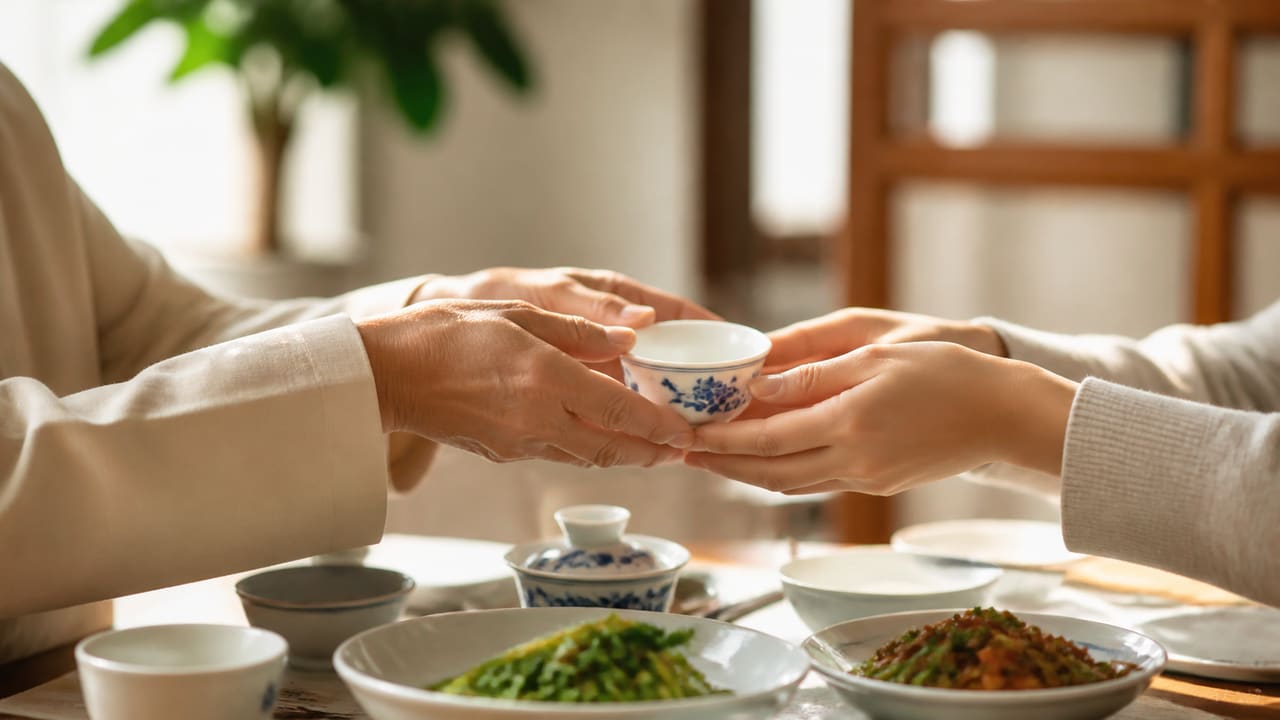
A gesture can carry more weight than a spoken “thank you” in everyday Chinese interactions. Passing something with both hands or making one polite offer before accepting are familiar examples.
When a foreign guest has dinner with Chinese friends for the first time, they may face a small puzzle: the other person insists on paying, the guest insists on splitting the bill, and both sides go back and forth at the cashier. In the end, the Chinese friend may pay and say, “You can treat next time.” This is usually not a problem with accounting. It is a way of putting the relationship before the amount of money.
Similar misunderstandings are common. Chinese politeness does not rely only on explicit polite expressions; it can also be found in gestures, tone, and measured insistence. There is no rulebook that every Chinese person follows. Region, age, and familiarity all change how people behave. Still, understanding several common patterns can make many situations less puzzling.
Using Both Hands Shows Seriousness, Not Ceremony
When handing over a business card, gift, or important document, some Chinese people use both hands. The other person may not notice whether you do the same, but using both hands can communicate, “I am taking this seriously.” The gesture is especially common with elders, clients, or people you are meeting for the first time.
The same idea can appear at the dining table. If someone pours tea for you, you can steady the cup or offer a quiet word of thanks. When serving tea to an older person, the gesture may be more formal than usual. These details are not a strict etiquette exam. Young friends sharing drinks outside a convenience store will naturally not perform a complete formal ritual every time.
Misunderstandings often come from treating a situation-specific habit as a hard rule. Chinese politeness becomes more relaxed as a relationship grows: the language may become more direct, while the gestures become more casual. Closeness can sometimes mean that there is no need to be so formal.
Insistence Does Not Always Mean a Real Refusal
When receiving a gift or being invited to dinner, some Chinese people first say, “That is too much trouble” or “You don’t have to.” This may be a genuine refusal, or it may show that they do not take the other person’s effort for granted. The key is not the sentence alone but the tone and actions that follow.
If someone clearly says they have dietary restrictions or have already made other plans, continuing to insist only creates pressure. If they merely smile and demur, then continue discussing the invitation, it is closer to a polite buffer. The safest approach is to confirm once more and then respect the clear answer.
Younger Chinese people are reducing many elaborate forms of polite exchange. Online transfers, splitting bills, and direct expression are increasingly common. Even so, “I’ll pay this time, you pay next time” remains familiar because it naturally connects two meetings.
Concern Is Often Expressed as Specific Questions
In English, concern might sound like “How have you been lately?” Chinese families more often ask, “Have you eaten?”, “Did you get home?”, or “Do you have enough clothes?” These questions may sound trivial, but they are checking whether someone’s daily life is safe and settled.
Boundaries can become blurred as a result. An older relative asking about work, relationships, or income may believe they are showing concern, while a younger person may not want to answer. A question should not be assumed to be appropriate simply because it comes from care; nor does every question need to be treated immediately as an offense. A short answer, a change of subject, or saying honestly that you would rather not discuss it are all possible responses.
Hospitality Does Not Mean the Guest Must Accept Everything
When visiting a Chinese family, the host may keep adding dishes while saying, “We did not prepare much.” This is usually not an objective assessment of the meal. It lowers the guest’s psychological burden. The host wants the guest to eat enough, while the guest praises the food and avoids seeming overly demanding. Both sides are looking after the other person’s dignity.
If you really cannot eat more, explain clearly that you are already full and specifically praise one of the dishes. A clear and gentle explanation is better than forcing yourself to finish. Allergies, religious restrictions, and health needs should be stated in advance.
Understanding everyday Chinese politeness takes less memorization than attention to the signals around the words. Both hands can show seriousness; a little insistence can acknowledge another person’s effort; questions about daily life can express care; and paying for a meal can help open the next interaction. Chinese people misread these signals too, so clear communication remains the safest guide.
References
- Chinese Culture: Etiquette (Cultural Atlas) - Do and Don'ts in China: A Guide to Chinese Etiquette (China Highlights) - Chinese Customs, Manners and Etiquette (Hutong School)

Peng Jinsui
I explore Chinese society, culture, travel, business, and language learning while studying Spanish and experimenting with AI and interactive products. I’m also open to helping people and organizations overseas better understand China, connect with local resources, and address practical needs.
Peng Jinsui