
Guochao Is Moving Beyond “Chinese Style”: Chinese Young People Are Choosing Local Brands Again
Chinese design can draw people in; the product still has to give them a reason to stay.
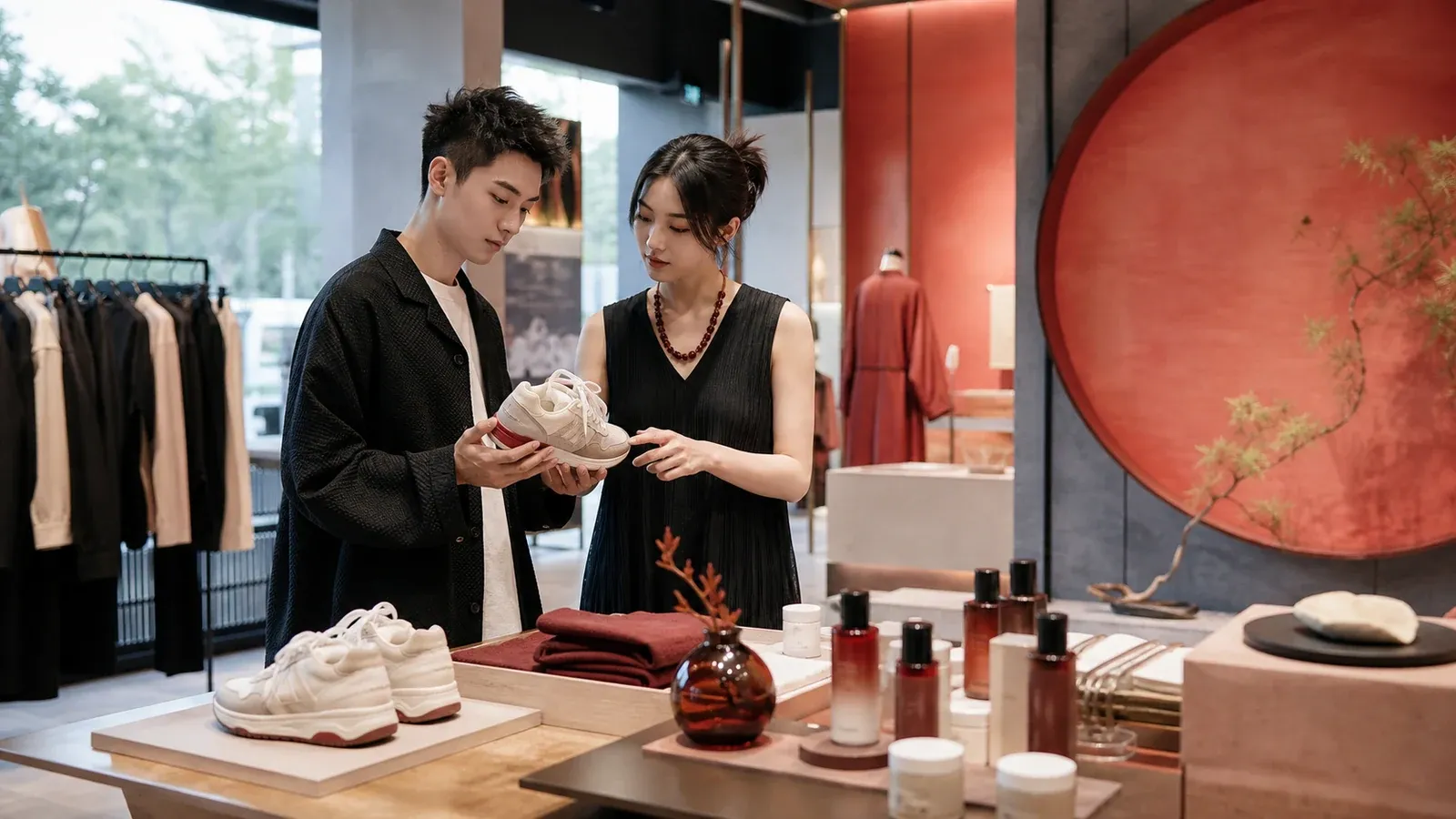
A pair of sneakers uses the colors of ancient architecture, a lipstick borrows traditional patterns, and a handbag has no obvious symbol at all but comes from a Chinese designer brand. All of them may be placed under the broad concept of “guochao.”
Guochao was initially often understood as putting Chinese cultural elements into modern goods. Now its scope has expanded to recognition of local brands, design, and lifestyles. Young Chinese consumers no longer assume that foreign brands necessarily represent better quality, nor do they automatically buy a product just because it carries a Chinese pattern.
Early Guochao Relied on Eye-Catching Cultural Symbols
From the late 2010s onward, sportswear, clothing, and beauty brands made extensive use of Chinese characters, auspicious clouds, Forbidden City color palettes, and traditional stories. Li-Ning’s display of clothing bearing the words “China Li-Ning” at international fashion weeks became the example of guochao most easily understood by foreign readers. Cultural symbols were direct, suitable for photographs, and could spread quickly on social media.
These products responded to young people’s more natural interest in local culture. Wearing Chinese brands was no longer seen as a substitute for when one had an insufficient budget; it could be an active choice. Museum cultural products, collaborations involving traditional crafts, and domestic animation provided abundant material as well.
But the first round of imitation also appeared quickly. Dragons, phoenixes, and calligraphy were repeatedly printed on packaging, and some products had no real connection with the culture they cited. Consumers began calling rigid accumulation of such elements “sticking on symbols,” and visual elements alone became increasingly difficult to use to sustain freshness.
Local Brands Better Understand Chinese People’s Specific Needs
Guochao can continue to develop for reasons beyond cultural identification. Local brands are closer to Chinese consumers and supply chains. They can see social-media feedback more quickly and can rapidly adjust sizes, colors, ingredients, and prices.
Beauty brands can develop products for the skin types and makeup effects Chinese consumers care about. Outdoor brands consider the mixed settings of commuting in Chinese cities and short trips, while food brands can package regional flavors in formats suitable for sale across different parts of China. Products may not use traditional patterns, yet they still reflect an understanding of the local market.
E-commerce and short video have reduced the cost for new brands to reach consumers. In the past, brands had to enter department stores to build recognition; now, they can first find a clearly defined group of users on Xiaohongshu, Douyin, or in livestreaming rooms, then gradually open offline stores. This speed makes it easier for local companies to keep up with suddenly changing interests.
Choosing Domestic Products Does Not Mean Rejecting Foreign Brands
Explaining all of guochao as nationalism overlooks the comparisons Chinese consumers actually make. Price, design, quality, and service still determine purchases. Foreign brands that understand local needs, update products, and maintain quality still have many customers; once a local brand’s quality declines, it will also quickly be criticized.
Young consumers are more confident but also more discerning about where brands come from. They are willing to support local design, but want to see originality rather than international brands copied and then given Chinese elements. For many people, the ideal domestic brand does not need to keep emphasizing that it is “domestic”; the product itself can stand on its own.
More cautious consumption in recent years has also reinforced this comparison. Consumers do not want to pay a premium only for a foreign name, and look for local products with similar materials and functions at more reasonable prices. At the same time, some maturely designed Chinese brands have also begun raising prices, showing that the old connection between “domestic” and “cheap” is loosening.
Guochao Is Moving From Patterns to Capability
Today, guochao can be a product that visibly cites traditional culture, or a completely modern Chinese company. The former provides cultural expression, while the latter reflects local capabilities in design, manufacturing, and brand management. Consumers discuss both forms, but they face the same test.
For Chinese elements to endure, their use must be grounded in an understanding of what is being referenced and must fit contemporary life. If traditional patterns are only decorative, they will soon be replaced by the next collaboration; if materials, function, and story work together, consumers will use them over the long term.
Chinese young people’s renewed choice of local brands is not a simple wave of patriotic consumption. The deeper change is that they no longer put “Made in China” and “foreign brands” at opposite ends of a quality hierarchy. Where a brand comes from still matters, but how well the product is made has once again become the most direct question.
References
- Five consumer trends shaping the next decade of growth in China (McKinsey) - Why China’s youth are swapping luxury for local brands (ThinkChina, 2025) - Chinese consumption amid the new reality (McKinsey, 2025)
Peng Jinsui
I explore Chinese society, culture, travel, business, and language learning while studying Spanish and experimenting with AI and interactive products. I’m also open to helping people and organizations overseas better understand China, connect with local resources, and address practical needs.
Peng Jinsui