
Hanfu Has Re-entered the Everyday Lives of Young Chinese People
What began as a niche interest now appears in travel, festivals, and everyday clothing, and it has sparked arguments about history and modernity along the way.
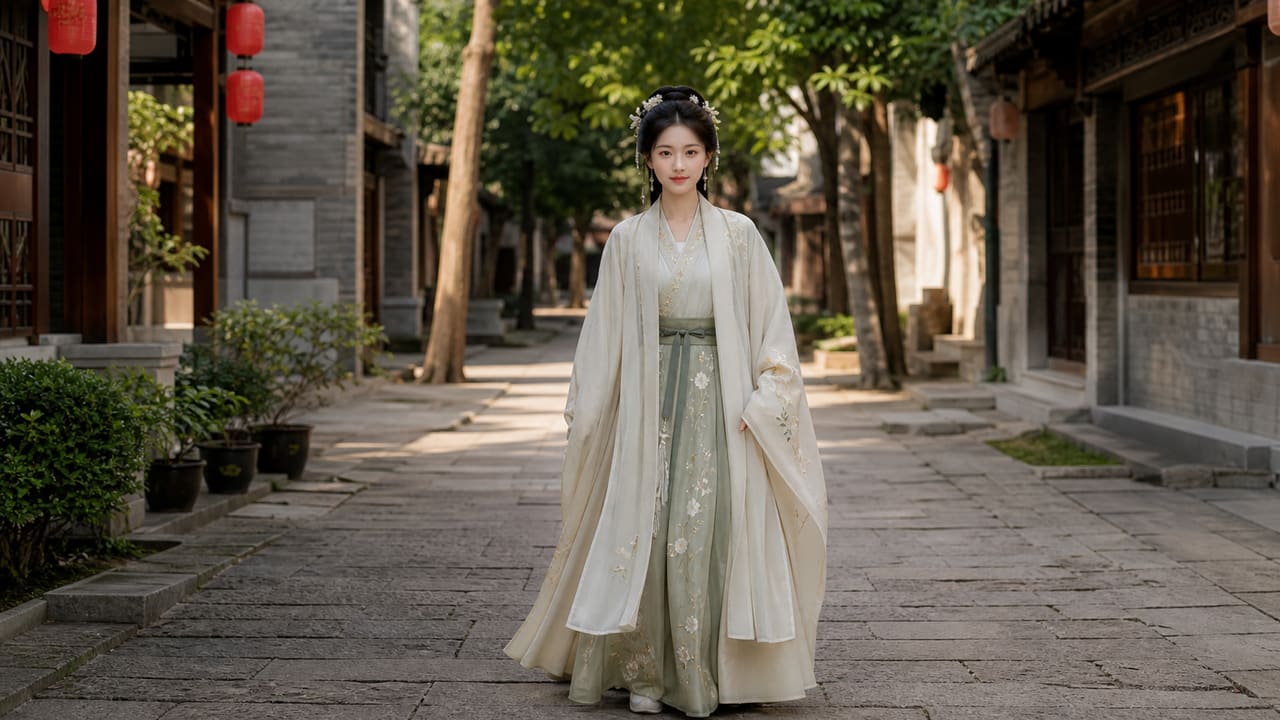
Near Xi’an’s city wall, the old city of Luoyang, or the gardens of Suzhou, it is no longer unusual to see young people wearing hanfu. Some buy a complete outfit months in advance; others rent one near a scenic area and add makeup and photography. Some pair a modified top with jeans and wear it directly to class or work.
The hanfu trend is often summarized as a “revival of traditional clothing,” but the reality is richer. It involves historical research and cultural identity, as well as fashion, community activities, and tourism consumption. Participants do not all give the same answer to the question of what counts as hanfu.
Hanfu Is Not One Uniform from One Dynasty
“Hanfu” today usually refers to the traditional clothing system of the Han Chinese, covering different forms developed across several dynasties. Terms such as cross-collar, right-over-left fastening, ruqun, and shenyi describe structures or categories; they do not mean all ancient Chinese people wore the same wide robe.
Dynasty, class, region, and occasion changed clothing. Ceremonial dress differed from work clothes, and Tang aesthetics were not the same as those of the Ming. When a seller labels something “Tang-style,” “Song-style,” or “Ming-style,” it identifies a design reference, not one uniquely correct version of hanfu.
Modern reconstruction also faces incomplete evidence. Excavated textiles, murals, and portraits offer clues, but may not preserve a complete way of wearing a garment. Serious enthusiasts discuss cuts and fabrics; ordinary consumers care more about whether something looks good, is convenient, and works for photographs. Both needs meet in the same market.
Why Are Young People Willing to Wear It Outside?
Early hanfu enthusiasts communicated through forums and offline clubs and had to face curious looks when wearing it in public. Today, short videos, online shops, and a mature supply chain have lowered the barrier to entry. Consumers can find products at different prices for different seasons and occasions and learn hairstyles and ways of dressing from videos.
Cultural identity is an important motivation, but not the only one. Some people begin with an interest in history, some like the silhouette and colors, and some simply want special photographs during a trip. Explaining everyone who wears hanfu through a grand cultural attitude overlooks young people’s individual choices.
Hanfu also provides a social entrance. Enthusiasts join flower festivals, coming-of-age ceremonies, traditional festivals, and city gatherings, meeting friends through a shared interest. The clothing turns from an object into a ticket into a community.
Why Have Scenic Areas Become the Most Common Stage?
Historic buildings and old neighborhoods provide suitable backgrounds for hanfu. Rental, makeup, and photography shops around scenic areas turn the experience into a complete service. Visitors do not need to own the clothes and can complete a look within a few hours.
This commercialization has made hanfu more visible but has also brought sameness. Popular makeup and template photographs are copied quickly, and some clothes pursue camera effects with little historical basis. But commerce does not necessarily conflict with culture: rental services let more people try it cheaply, and as the market grows, some people turn toward more precise reconstruction and traditional crafts.
Can Hanfu Become Everyday Clothing?
The long sleeves, hems, and accessories of a complete ceremonial outfit are not always suitable for subways, offices, and modern housework. Lighter modified styles have appeared: they retain collars, ties, or patterns while shortening sleeves and adding zippers and pockets.
Some enthusiasts worry that too much modification will lose the form, while others believe tradition will continue only by entering everyday life. The debate has no simple answer. Museum-style reconstruction values evidence; modern fashion values use. They can follow different standards as long as imagination is not presented as historical fact.
Hanfu’s return to the lives of young Chinese people is not the ancient wardrobe coming back unchanged. It has been remade through online communities, e-commerce, scenic areas, and contemporary taste. Some wear it solemnly, some casually; some study every seam, while others simply enjoy a photo session. These different uses are exactly what make traditional clothing a changing reality rather than a historical image.
https://www.youtube.com/watch?v=eJ89LpC9wUk
References
- Traveling in Hanfu (China Youth Daily, 2024) - Behind “Guochao,” Cultural Confidence Is Growing (State Council Information Office, 2024) - The Rise of the Ancient-Style Economy (People’s Weekly)

Peng Jinsui
I explore Chinese society, culture, travel, business, and language learning while studying Spanish and experimenting with AI and interactive products. I’m also open to helping people and organizations overseas better understand China, connect with local resources, and address practical needs.
Peng Jinsui