
How Do China’s Five-Year Plans Affect Ordinary People’s Lives?
A Five-Year Plan does not immediately fulfil every wish. It breaks China’s long-term goals into a framework for coordinating policy, investment, and public services.
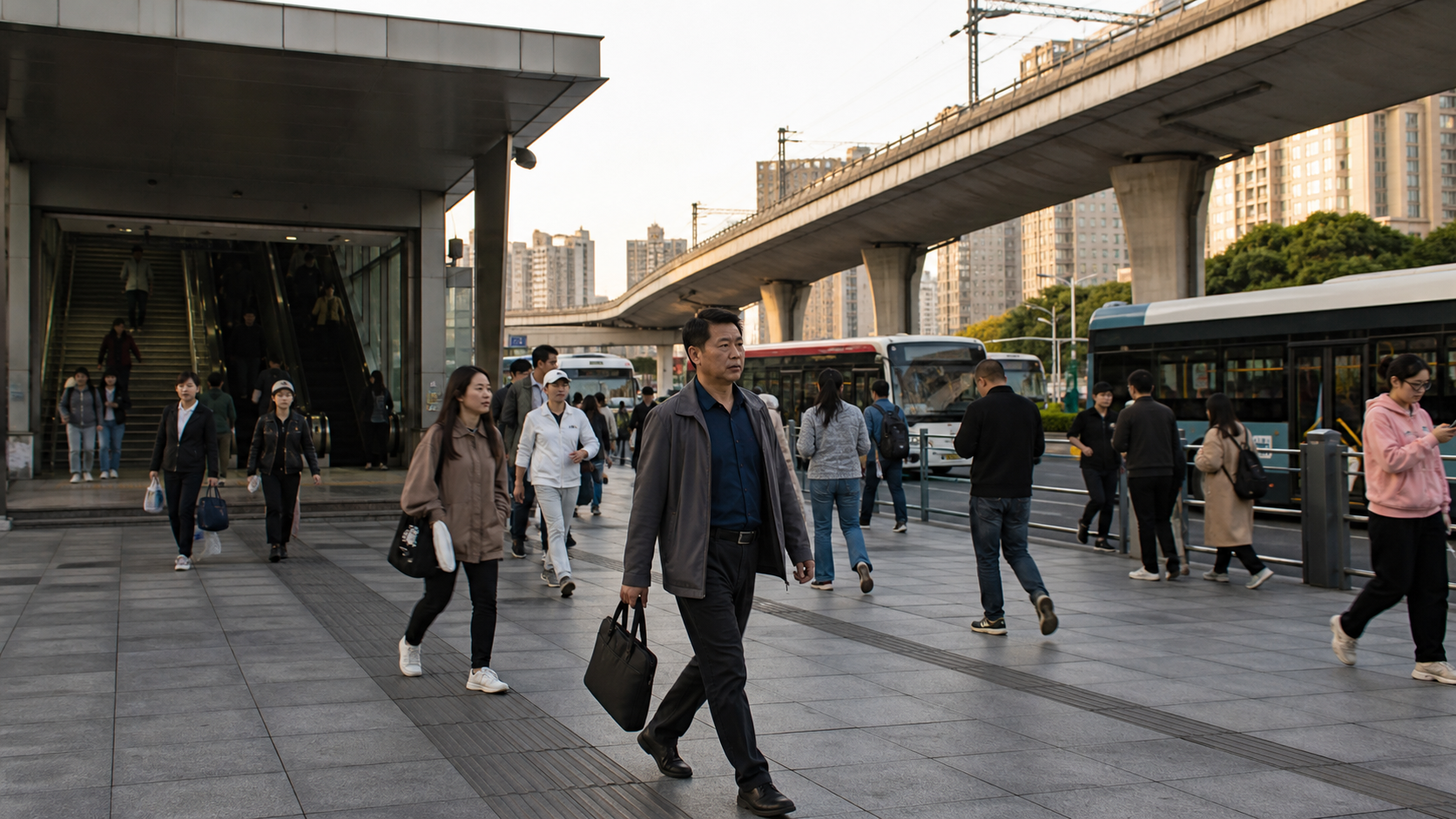
A Five-Year Plan does not immediately fulfil every wish. It breaks China’s long-term goals into a framework for coordinating policy, investment, and public services.
Foreign news often mentions China’s “Five-Year Plan,” but the term can make it sound like a document used only in government offices. In practice, a plan sets goals for the economy, technology, education, healthcare, transport, the environment, and regional development, then implements them gradually through annual budgets, special campaigns, and local plans. It is not a construction calendar for every project, and it does not guarantee that every goal will move at the same speed. It does influence where governments direct attention and resources.
China began implementing its first Five-Year Plan in 1953 and later developed a system of Five-Year Plans covering economic and social development. The current discussion concerns the 15th Five-Year Plan for 2026–2030. The Outline of the 15th Five-Year Plan for the National Economic and Social Development of the People’s Republic of China, issued by the National Development and Reform Commission, sets out a phased goal of basically achieving socialist modernization by 2035. When reading such documents, distinguish long-term goals, five-year tasks, and annual implementation. A direction in a plan should not be written as if it has already happened.
How a plan moves from a document into a city
National plans usually begin by setting broad directions, such as strengthening scientific and technological innovation, expanding domestic demand, improving public services, promoting a green transition, or coordinating regional development. Provinces, cities, and counties then make implementation plans based on their own conditions. A coastal city may focus on advanced manufacturing and international trade, a resource-based area may be more concerned with energy transition, and an inland area with a large population may need to consider employment, education, and transport together.
This process helps explain why subways, industrial parks, hospitals, vocational schools, and public cultural facilities can appear in a Chinese city at the same time. They may not belong to one project, but they may all be influenced by the development goals of a particular period. A plan provides direction and a coordination mechanism. Specific projects still have to pass tests involving funding, land use, environmental assessment, and operating capacity.
Ordinary people experience a plan in concrete ways. A new railway may change the commuting time between a county seat and a large city. More places in vocational education may give a high-school graduate another path into study and work. Renovating an old residential neighbourhood can affect lifts, utility lines, parking, and shared spaces. A policy document does not solve these problems automatically, but it determines which problems enter public budgets and local performance assessments.
Why five years is a useful unit of time
Five years is long enough to build infrastructure, train people, and change an industrial chain, but short enough to check results. A company investing in a factory, a university building a laboratory, and a local government improving public transport usually need several years. Policies made only on an annual basis can encourage a focus on short-term figures. A goal set only for several decades is hard to use when deciding whether current steps are working.
A Five-Year Plan also provides a timetable for coordinating different departments. Energy, transport, housing, and industrial policy affect one another, and moving one forward alone can create a new bottleneck. The growth of new-energy vehicles, for example, requires more than car companies. It also needs batteries, charging facilities, the power grid, roads, and consumer services. A plan places these questions within a longer time frame and helps governments and companies anticipate supporting needs.
A plan is not a replacement for the market, however. Whether a goal is achieved still depends on technological progress, company competition, household consumption, the international environment, and local implementation. Some indicators may be completed early, while others may need adjustment. When readers see “the plan proposes,” they should treat it as a policy direction. When they see “completed” or “reached,” they should look for statistics and evaluation reports.
How foreign readers can read China’s planning documents
Look first for three layers of information. The first is the problem to be solved, such as employment, innovation, the environment, or regional inequality. The second is the method, such as investment, institutional reform, public services, or industrial policy. The third is how the result will be measured, such as employment, research spending, energy intensity, or household income. Read this way, a plan becomes a policy language connecting problems, tools, and indicators rather than a string of abstract slogans.
It is also important to notice the distance between a central plan and local reality. China is geographically diverse, so one goal can mean different things in different cities. A large city may be concerned with traffic congestion, while a mountainous county may first need a safe road. In digitalization, a developed region may be discussing artificial-intelligence applications, while a remote area may still be filling gaps in networks and public services. The relationship between national scope and local implementation is an important entry point for observing Chinese governance.
Five-Year Plans affect ordinary people’s lives because they place many separate decisions within a long-term order of priorities. Rail transit in a city, the subjects offered by a school, a company’s investment direction, and the employment opportunities facing a household may all have a background in that order. Foreign readers do not need to treat a plan as a perfectly precise blueprint. They can see it as an institutional tool China uses to coordinate long-term development and annual action.
https://www.youtube.com/watch?v=RVIwDcSDguo
References
- Outline of the 15th Five-Year Plan for the National Economic and Social Development of the People’s Republic of China (National Development and Reform Commission) - CPC Central Committee Recommendations for Formulating the 15th Five-Year Plan for National Economic and Social Development (Ministry of Commerce)

Peng Jinsui
I explore Chinese society, culture, travel, business, and language learning while studying Spanish and experimenting with AI and interactive products. I’m also open to helping people and organizations overseas better understand China, connect with local resources, and address practical needs.
Peng Jinsui