
The Lives of Young Chinese People Living Alone Are About More Than One-Person Meals and Loneliness
Living alone brings freedom. It also means building new routines for meals, safety, social life, and a sense of belonging.
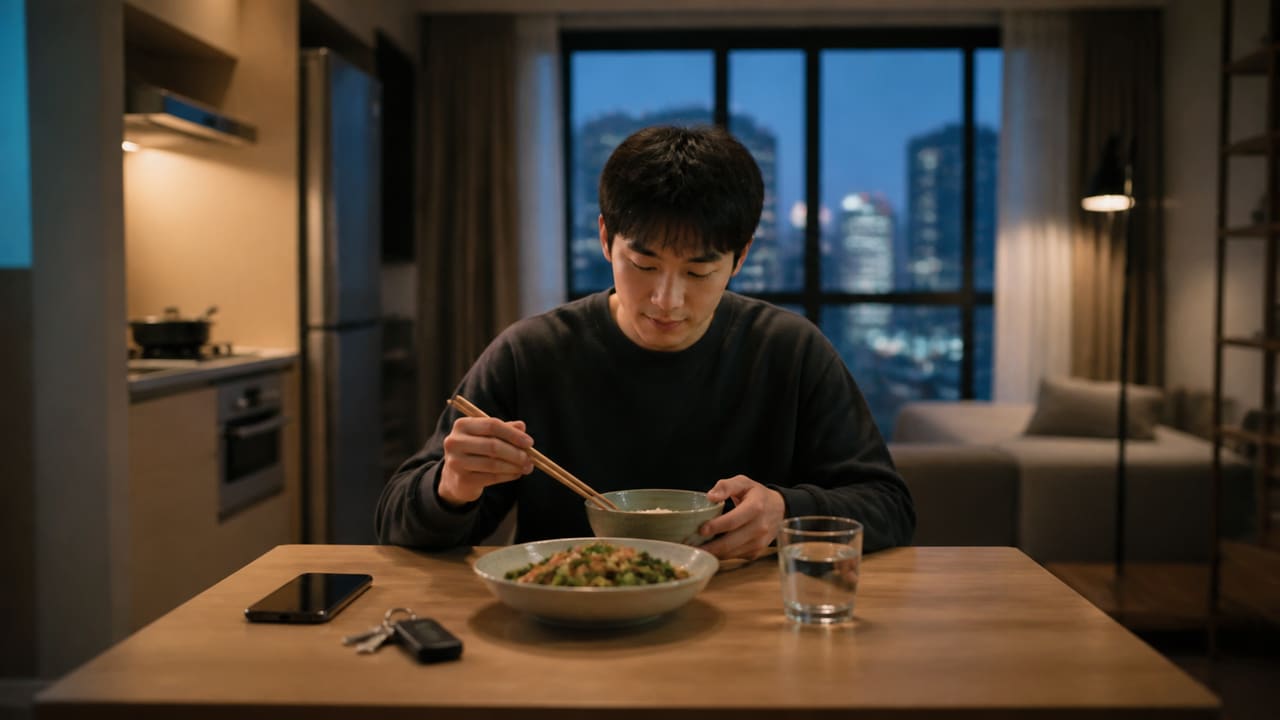
At seven in the evening, a young person living in a Chinese megacity may order delivery on the way home from work, collect a parcel from the residential compound’s locker, and video-call family for a few minutes. At the weekend, they may meet friends for dinner, or go alone to the gym, a cinema, or their rented apartment to tidy up.
“Young people living alone” are often shown in two opposite ways: free and polished in a beautifully arranged apartment, or lonely and exhausted, surviving on delivery food and a phone. Real life is usually somewhere between the two. Living alone is neither a rejection of family nor automatically a sign of being single. It is first of all a living arrangement.
Living Alone Often Begins with Leaving Home
Many Chinese young people move to another city for university or work. Their parents remain in their hometown, roommate arrangements are not always stable, and once they can afford the rent, living alone may feel more comfortable. It means not having to coordinate schedules or explain who can visit, how many degrees the air conditioner should be set to, or when the kitchen can be used.
This freedom has a clear cost. Rent for a small apartment in a major city is not low, and utilities, internet, and housework cannot be shared. Tenants repeatedly balance commuting distance, housing conditions, and budget. The clean, bright rooms shown online often do not show the trouble of moving, repairs, and renewing a lease.
One-Person Life Creates Smaller Portions
Restaurants and retailers are adapting to one-person households. Supermarkets carry smaller packages, restaurants offer individual set meals, and small appliances emphasize compact capacity and quick cleaning. Foods once closely associated with group meals, such as hotpot and barbecue, are also increasingly easy to eat alone.
Delivery solves the problem of time-consuming cooking, but it can bring costs, nutritional concerns, and packaging waste. As a result, some young people living alone prepare ingredients at the weekend and make simple dinners with an air fryer, rice cooker, or small wok. “One-person meals” are not only a commercial label; they are also a practice. Even without someone across the table, a person may still choose to eat a proper meal.
Phones Make Solitude Different from Disconnection
Young people living alone often have not lost contact with family; the form has changed. Parents ask whether they have eaten in the family group chat, and video calls let relatives thousands of kilometers apart see one another. Friends arrange meals through instant messages, while interest groups and online games offer companionship.
This connection can be intense, but it cannot fully replace real-world support. When someone is ill, falls, or comes home late at night, the risks of living alone become concrete. Young people may leave a spare key with a friend, set an emergency contact, use smart locks and cameras, or ask a neighbor to keep an eye out if they have not appeared for several days.
Living Alone Does Not Conflict with Chinese Family Life
Chinese families still value living together and looking after one another. Some parents worry that an adult child living alone means that a relationship has gone badly or that nobody is taking care of them. Young people are more likely to see independent living as personal space. What the two sides are really arguing about is often not how many people live in the home, but who has the right to decide an adult’s pace of life.
Living alone may also last only a few years. Changing jobs, marrying, moving in with parents, or buying a home can all change the arrangement. Even someone who lives alone long term may maintain close relationships with relatives and friends.
Freedom Requires a Personal Order
Without a roommate reminding you to take out the trash or a family member preparing dinner, a person living alone has to establish their own routine: paying bills, shopping, cleaning, seeing a doctor, and resting. Once order is established, a small room can offer stability; when order is lost, clutter and exhaustion can pile up quickly.
Young Chinese people living alone attract attention not because they have all chosen loneliness, but because urban life has pulled housing, work, and family relationships apart. After closing the door, one person remains connected to the whole city through a phone, parcel lockers, delivery points, family, and friends. What living alone really adds is not only freedom, but the concrete work of being responsible for yourself.
https://www.youtube.com/watch?v=1ANt4UyDwvg
References
- Young People Support Seven New Tracks in the “Living Alone Economy” (21st Century Business Herald, 2025) - China Has More Than 125 Million One-Person Households: Why Are More People Living Alone? (China News Service) - A Portrait of Young People Living Alone: Between Loneliness and Freedom (China Internet Information Center)
Peng Jinsui
I explore Chinese society, culture, travel, business, and language learning while studying Spanish and experimenting with AI and interactive products. I’m also open to helping people and organizations overseas better understand China, connect with local resources, and address practical needs.
Peng Jinsui