
To Understand Chinese Xianxia Dramas, Do Not Treat Them as Ordinary Fantasy
Sword flight, heavenly trials, and love across several lifetimes all belong to a world shaped by cultivation, order, and difficult choices.
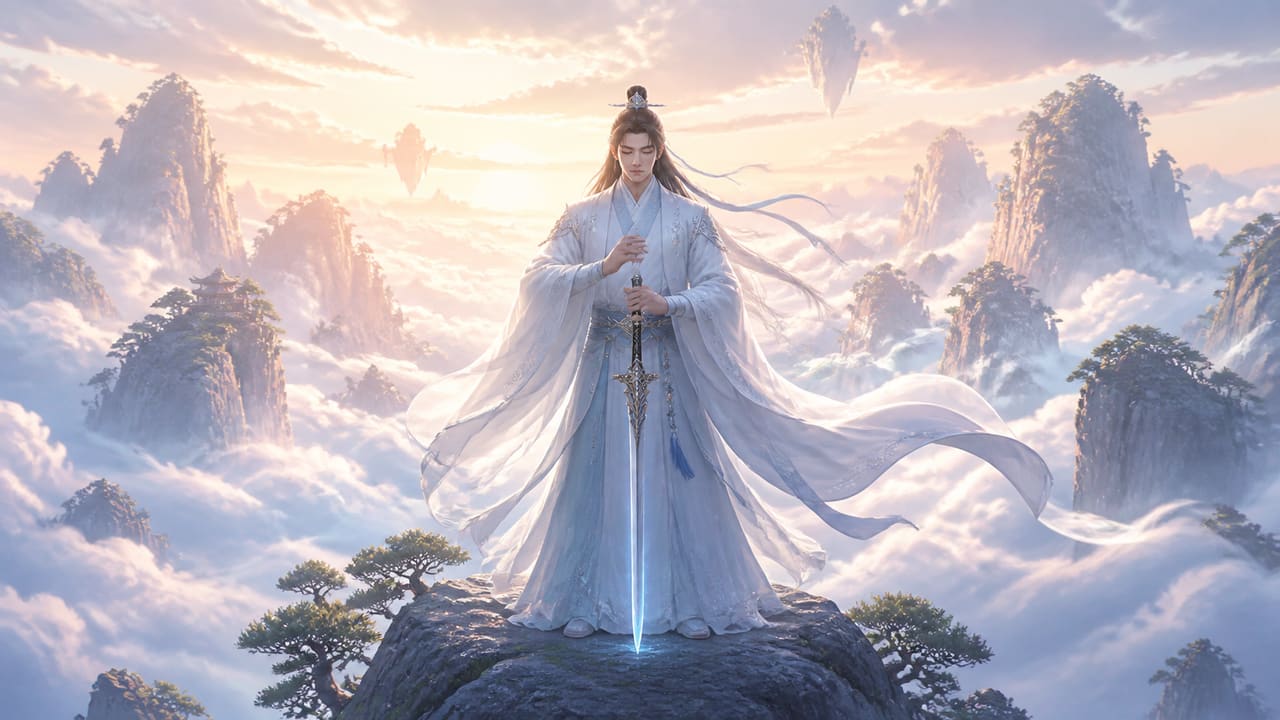
When watching a Chinese xianxia drama for the first time, foreign viewers can easily be overwhelmed by terms: immortals, demons, spirits, and humans belong to different worlds; characters live for hundreds of years and can be reincarnated after death; a sword is both a weapon and a way to fly. The subtitles explain each term, but the story can still feel as if it is missing an instruction manual.
Understanding xianxia does not require memorizing an entire setting. Start with “cultivation,” then distinguish it from wuxia, and many character relationships become clearer.
Wuxia Trains Human Skills; Xianxia Seeks to Transcend the Human
Wuxia stories mostly take place among humans. Characters become masters through martial arts, school traditions, and experience in the jianghu, the world of martial communities. However exaggerated their abilities are, they still revolve around the human body and social rules.
Xianxia pushes the boundary farther. Characters absorb spiritual energy, cultivate magic, and use magical artifacts in the hope of breaking through limits of life and ability. They may enter different realms, undergo a heavenly tribulation, and finally become immortals. Here “immortal” does not mean a god who was born deathless in Western mythology; many characters were originally human and change step by step through cultivation.
The two genres are often mixed, so there is no need to give every drama an absolute label. If its core is cultivation, immortal sects, and a supernatural world, it is generally closer to xianxia.
A Sect Is Like a School, a Family, and a Political Organization
The xianxia protagonist often enters a sect, takes a master, and gains techniques, weapons, and relationships with fellow disciples. The master does not only teach skills but also takes on a parent-like responsibility; terms such as senior brother and senior sister show both order of entry and closeness.
A sect has its own rules, interests, and historical grudges. It can protect disciples, but it may also demand that an individual sacrifice for the collective. Being expelled means losing not only a job, but an identity, family, and moral belonging.
That is why xianxia dramas often write about the “righteous path” and the “demonic path” while repeatedly breaking the boundary between them. An organization that calls itself righteous is not always fair, and a character called a demon may have their own loyalty. The real question is whether the identity given by outsiders can decide what kind of person you are.
A Heavenly Trial Is Not Just a Random Thunderstorm
When cultivation reaches a critical stage, a character often has to “cross a tribulation.” The most common image is lightning, but it is not merely a special-effects scene. A tribulation shows that growth has a cost and reminds viewers that power cannot be gained without limit.
Xianxia also likes cause and effect, attachment, and inner demons. The first emphasizes that actions leave consequences; the latter two turn inner conflict into an obstacle that can be seen. A character may have great magical power and still fail because they cannot let go of hatred.
These concepts borrow terms from Chinese religions and philosophies, but screen stories combine them freely. The xianxia world is not a direct presentation of Daoist doctrine and should not be treated as a description of Chinese people’s actual religious lives.
Why Does Love So Often Cross Several Lifetimes?
Long lives and reincarnation give love a larger scale. Characters can forget a previous life and meet again, or give up their cultivation to protect someone. Missed chances, promises, and differences in status in ordinary love are expanded across hundreds of years and several worlds.
Sometimes this kind of narrative lets the world-building give way to the romance. A battle between immortal sects may seem to concern the fate of everyone, while the story is really asking whether two people can trust each other. Foreign viewers who track every piece of world-building may miss the simplest emotional conflict.
The Easiest Way to Watch
In the first few episodes, remember three things: which world the protagonist belongs to, which sect they enter, and what they most want. When a new realm name appears, you do not need to memorize the entire ranking; just know who is stronger than whom. Forms of address matter more than names because “master,” “senior brother,” and “sect leader” already explain the relationship.
Also accept that the rules do not carry over from one work to another. A term such as “golden core” or “high immortal” may have a different meaning in another drama. There is no single xianxia universe; each story recombines Chinese fantasy ideas in its own way.
You do not need to learn every Chinese term before xianxia starts to make sense. Look at the questions behind cultivation: how does a person gain power, what do they owe the group they join, and what will they pay for their choices? Flying on a sword is the entry point; the stories hold attention because their problems remain human.
https://www.youtube.com/watch?v=9T8jaSOqPo4&t=786s
References
- Foreign Audiences of Online Xianxia and Fantasy Literature (Sanlian Life Week) - When Chivalry Retreats and Romance Spreads: Xianxia Drama Becomes Xianqing Drama (China News Service) - Clarifying Wuxia, Xianxia and Related Chinese Fantasy Genres (Reddit r/Fantasy Community Guide)
Peng Jinsui
I explore Chinese society, culture, travel, business, and language learning while studying Spanish and experimenting with AI and interactive products. I’m also open to helping people and organizations overseas better understand China, connect with local resources, and address practical needs.
Peng Jinsui