
Why Can China’s New-Style Tea Drink Shops Open at Such an Astonishing Speed?
Rapid store expansion depends on turning one drink into a system that many stores can repeat.
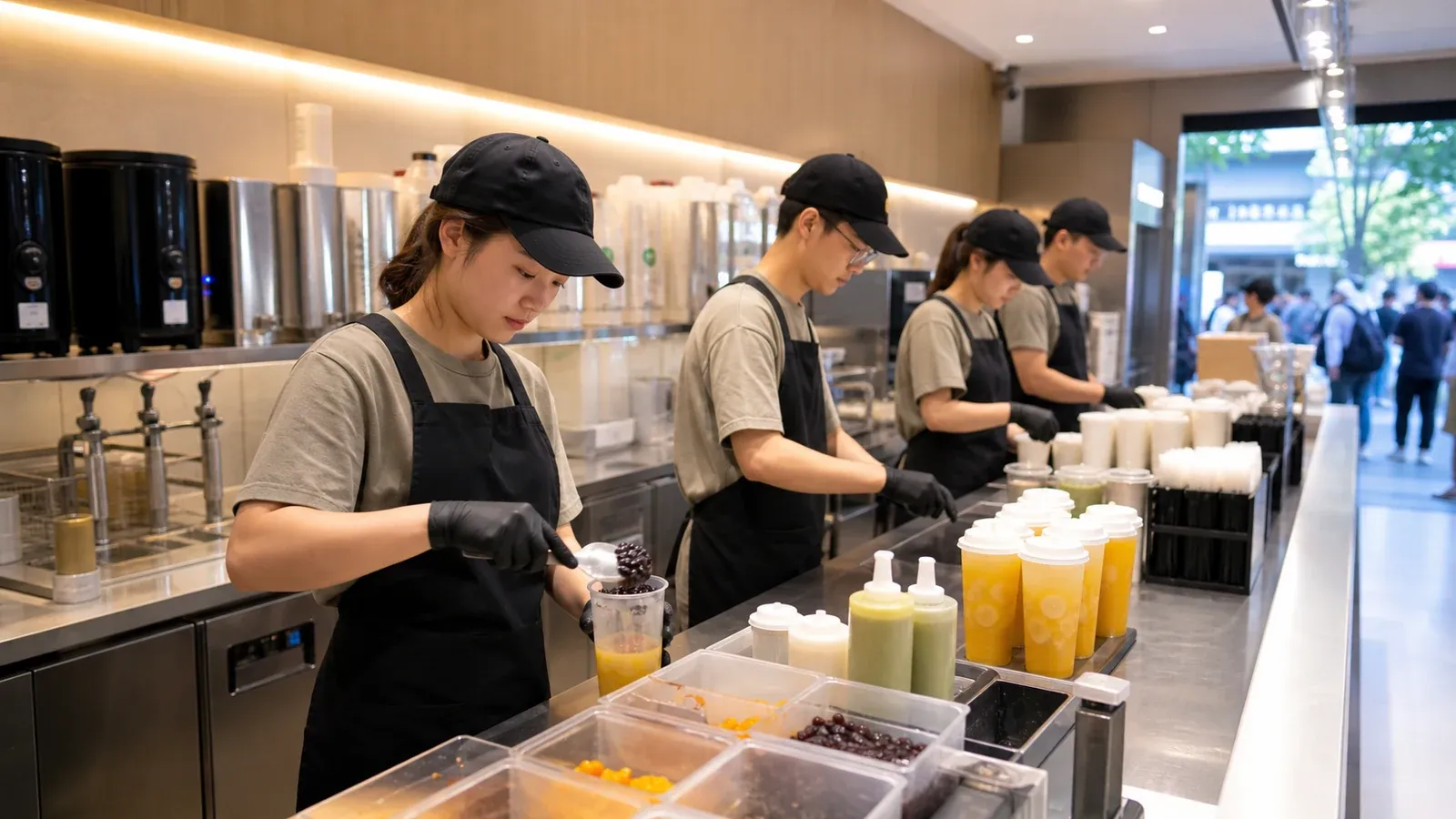
On an ordinary commercial street in a Chinese city, two or three new-style tea drink stores of the same brand may appear within a few months. The stores are not large, the menus are similar, staff make drinks according to orders on screens, and ingredients are taken from standardized packages. For customers, this means they can buy a familiar taste after arriving in another city; for brands, each store is a copy of the same system.
By the end of 2025, MIXUE Group had more than 60,000 stores, and CHAGEE had also built thousands. The expansion of China’s new-style tea drinks may look like a race to open stores, yet the longer contest is over supply chains, franchise management, and site selection.
Brands First Make Complex Preparation Simple
Traditional tea houses depend on tea-brewing experience and on-site service, which are not easy to replicate quickly. New-style tea drinks break the process into weighing, timing, adding ingredients, and sealing. Headquarters determine the recipes, equipment controls temperature, and staff follow standard steps. Stores need training, but not every one needs an experienced tea maker.
Menus are also designed. There may appear to be many flavors, but the underlying ingredients can be used repeatedly. One tea base can be paired with milk, fruit, or different toppings, giving consumers a sense of abundant choice while avoiding the need for warehouses to prepare completely separate materials for every drink.
Mobile orders further improve efficiency. The system receives sugar level, ice level, and topping choices in advance; stores make drinks in order, and consumers pick them up at the store. Headquarters can also see what sells quickly in different regions and adjust promotions and stock preparation in time.
Franchising Suddenly Increases the Speed of Opening Stores
Many Chinese new-style tea drink brands rely mainly on franchising to expand. Franchisees take on store rent, decoration, and daily operations, while headquarters provide the brand, training, equipment, and ingredients. Brands do not need to invest all the capital for every store, so they can enter a large number of cities and counties in a short time.
Large brands’ franchise income includes brand-use fees and revenue from supplying stores with syrup, tea leaves, dairy products, packaging, and equipment. The more stores there are, the larger the scale of centralized purchasing and production, and the easier it is for the cost per cup to fall.
MIXUE Bingcheng’s low-price model particularly depends on this capability. It enters many lower-rent communities, areas near schools, and small cities, using high-frequency, low-price products to form dense networks of stores. Brands such as CHAGEE place more emphasis on fresh milk tea made with whole tea leaves, shopping-mall locations, and brand space, so their investment per store and average transaction value differ. They all open stores quickly, but they do not use exactly the same formula.
Why One Street Can Accommodate Many Stores
Freshly made drinks are bought frequently, while their service radius is short. Customers usually do not cross half a city just to save a few yuan; they choose the store that is convenient near the office, school, or route home. Delivery platforms also prefer to show nearby stores to users, so dense store openings can shorten delivery distances.
Stores also serve an advertising role. Eye-catching signs, queues, and continually appearing new stores keep a brand visible. A consumer may first see a brand in a shopping mall, then place an order at a small store near home.
However, excessively high store density can make franchisees of the same brand compete with one another for customers. Headquarters continuing to expand in scale does not mean that every store can be profitable. Rent, labor, platform commissions, and ongoing promotions can all compress profits.
Rapid Replication Also Amplifies Problems
Once a supply chain goes wrong, the problem can reach many stores at the same time. Ingredient quality, cold chains, and food safety must cover thousands of stores. If franchisees replace ingredients on their own or lower service standards, this also harms the whole brand.
The pace of new product updates brings pressure as well. To attract customers, brands frequently introduce seasonal flavors and collaboration products. Stores have to buy new materials and adjust procedures, and may also be left with inventory they cannot use up. The faster stores open, the more headquarters need a management system that can supervise stores rather than only signing contracts.
China’s new-style tea drinks open stores quickly because food-service industrialization and digitization have matured together. Brands have turned a drink made on site into a product supported by centralized procurement, standardized training, mobile ordering, and franchise replication. Hanging a sign in another city is easy; the hard part is keeping every store selling enough cups over the long term.
References
- MIXUE Group Annual Report 2025 (Hong Kong Stock Exchange, 2026) - MIXUE Group Global Offering Prospectus (Hong Kong Stock Exchange, 2025) - CHAGEE Holdings 2025 Annual Report (U.S. Securities and Exchange Commission, 2026) - CHAGEE Holdings IPO Prospectus (U.S. Securities and Exchange Commission, 2025)

Peng Jinsui
I explore Chinese society, culture, travel, business, and language learning while studying Spanish and experimenting with AI and interactive products. I’m also open to helping people and organizations overseas better understand China, connect with local resources, and address practical needs.
Peng Jinsui