
Why Can Guofeng Enter Music, Games, and Fashion at the Same Time?
Guofeng has no single classical form. It is a way for contemporary China to keep recombining traditional materials.
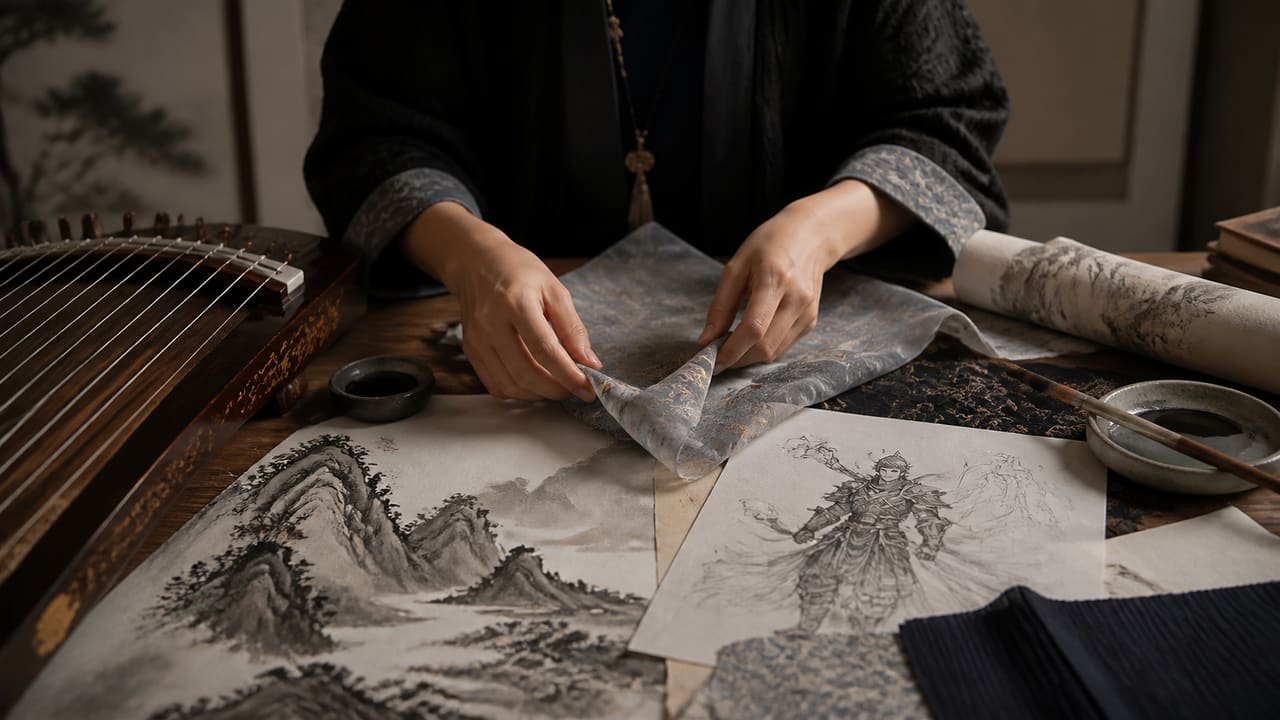
A pop song adds an operatic vocal line, a game builds a city from an ancient painting, and a modern coat borrows frog buttons and landscape patterns. All of these products may be called “guofeng.” Foreign readers looking for a shared set of design rules will soon find that no such rules exist.
Guofeng is more like a broad label: creators take material from Chinese history, literature, crafts, and aesthetics and recombine it through contemporary media. It can be highly researched or borrow only a few striking symbols. To understand guofeng, look at how tradition is turned into something people can hear, play, and wear today. Whether it looks “old” enough is a secondary question.
Music Brings Traditional Sounds into Pop Structures
Guofeng music often places the guzheng, dizi, pipa, or operatic singing into pop, electronic, and rock arrangements. The lyrics like classical imagery, while the melodies and production methods are usually modern.
This combination lowers the barrier to entry. A listener does not need to understand a whole opera to be drawn in by a short vocal passage; afterward, they may search for the character, story, or singing style. Traditional sound is taken apart, reshaped, and folded into a new work.
The risk is clear too. If a flute sound and classical-style lyrics are enough for the label “guofeng,” different regions, periods, and art forms are flattened into a vague Eastern atmosphere. Strong works usually do more than decorate the surface and study the original context of their material.
Games Turn Culture from Something Seen into Something Done
Games let players walk, solve puzzles, and fight in a virtual space, making them especially suitable for showing architecture, landscapes, mythology, and crafts. Players encounter these elements while moving through a task, solving a problem, or making a choice.
Black Myth: Wukong draws on Journey to the West and local historic buildings; other Chinese games place opera, solar terms, food, and traditional instruments into characters and scenes. Overseas players may enter because of the graphics or gameplay and then look for the Chinese stories behind them.
But cultural details must serve the game itself. If knowledge is inserted stiffly, players will skip it like a manual. Effective guofeng design makes architecture affect routes, music change the atmosphere, and mythology determine character behavior, so traditional materials cannot be separated from play.
Fashion Deals with “Can It Be Worn?”
Fashion is the most visible of the three, and it faces everyday use most directly. Designers can borrow standing collars, frog buttons, cloud patterns, embroidery, or traditional colors, but they must consider movement, washing, and workplaces.
That is the difference between guofeng fashion and historical clothing. The former can mix periods freely and use modern fabrics; the latter needs stricter evidence if it claims to be a reconstruction. Both can be valuable. The question is whether the designer clearly explains what they are doing.
Young consumers do not always want a complete outfit. A pair of sneakers with a traditional pattern or a bag based on the idea of mortise-and-tenon joinery may enter daily life more easily than formal dress. Tradition gains new life through small, usable areas of design.
Why Is Guofeng Especially Active Today?
Digital platforms make it easy for creators to show details and for audiences to discuss and recreate them. Mature manufacturing turns niche inspiration into products at different prices and quantities. As young Chinese people become more familiar with local culture, they are more willing to treat it as a contemporary aesthetic resource that belongs in everyday life as well as museums.
“Guofeng” is also an efficient marketing language. It helps a product establish an identity quickly, but it can also become a label. Dragons, red, and calligraphy do not automatically make a design work. The more specific the cultural source, the more convincing the result usually is.
Guofeng can move across music, games, and fashion because it has no single medium or fixed style. The process is simple to describe: creators select elements from older materials, reorganize them with today’s technology and habits of consumption, and offer them to a new audience. The result succeeds when those symbols help express something, rather than merely decorate the surface.
https://www.youtube.com/watch?v=aknkofx2bHg&list=RDaknkofx2bHg&start_radio=1
References
- New Cultural-Consumption Preferences Reflect Growing Cultural Confidence among Young People (Xinhua, 2024) - Games Go Global, and Culture Breaks Out (Globe Magazine, 2024) - Culture Has Come Alive and Become Popular (China Youth Daily, 2024) - When Youth Meets Guofeng (People’s Daily, 2025)
Peng Jinsui
I explore Chinese society, culture, travel, business, and language learning while studying Spanish and experimenting with AI and interactive products. I’m also open to helping people and organizations overseas better understand China, connect with local resources, and address practical needs.
Peng Jinsui