
Why Do Chinese Local Governments Build Development Zones to Attract Industry?
From an empty plot of land to factories, warehouses, and research buildings, a development zone is a window into China’s local economy.
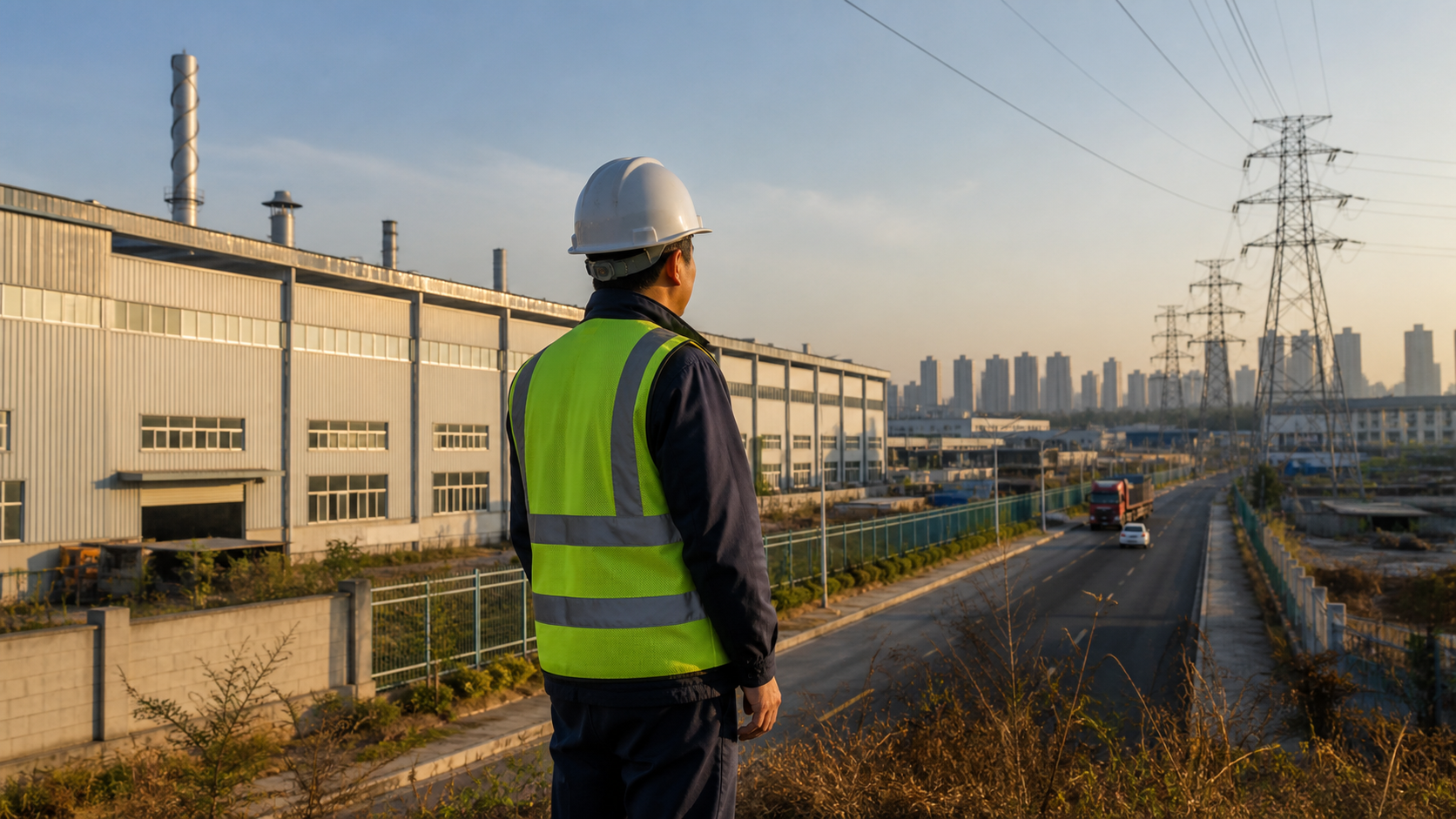
From an empty plot of land to factories, warehouses, and research buildings, a development zone is a window into China’s local economy.
Foreign readers who see rows of factory buildings on the edge of a Chinese city may assume they are simply industrial parks. In practice, development zones usually have planned boundaries, an industrial focus, and a management body. Local governments prepare roads, electricity, water, communications, and approval services in advance, then attract companies to move in. A zone is both a physical space and an economic tool for organizing land, infrastructure, capital, and administrative services.
China has many kinds of development zones, including economic and technological development zones, high-tech industrial development zones, and agricultural high-tech demonstration zones. Their priorities differ. Some focus on manufacturing and foreign investment, some serve research and high-tech companies, and some centre on agricultural processing and modern farming. Not every zone is the same, and the words “high-tech” do not mean that a zone contains only laboratories.
Why industries need to gather in one area
A factory needs much more than a piece of land. It needs reliable electricity, roads, and logistics, as well as upstream and downstream suppliers, workers, engineers, testing institutions, and financial services. When companies are close to each other, transport and communication costs may fall, and employees can move more easily within the same area. Local governments build development zones in the hope of concentrating scattered production factors so that companies do not have to find every supporting service from scratch.
Industrial clusters can also produce learning effects. In a place with many auto-parts companies, workers and engineers accumulate relevant experience, while equipment suppliers, mould makers, and testing institutions are willing to set up there. A new company can use existing supply chains and talent networks. These advantages take years of investment, company arrivals, and market selection to form; one investment promotion campaign cannot create them on its own.
Development zones also give local governments a clearer object of governance. Compared with scattering projects throughout a city, concentrated planning makes it easier to arrange wastewater treatment, hazardous-materials management, transport, and energy facilities. When companies face questions about hiring, customs declarations, or administrative approvals, they may be able to seek coordination through the zone’s management body. Zone services ultimately have to be measured by processing time and the concrete difficulties companies face. Those details determine whether a zone is attractive.
How investment promotion is moving from incentives to industrial services
In the past, some localities competed for projects with land prices, tax and fee concessions, or various subsidies. Such measures could bring investment quickly, but they could also cause duplicated construction and inefficient competition. A zone that pursues only the number of factory buildings, without technical, market, and environmental support, may not keep companies there for long. A 2025 Ministry of Commerce document on deepening reform and innovation in national economic and technological development zones emphasizes coordination across industrial and supply chains, integration of domestic and foreign trade, and high-level opening-up. This suggests that policy priorities are moving from “bringing companies in” toward “keeping and upgrading the industrial chain.”
For companies, the value of a development zone can usually be tested with a few practical questions: Can raw materials arrive quickly? Can products leave reliably? Is there a clear process for expansion? Can employee housing and public transport keep up? Are environmental and safety requirements transparent? If a local government handles these basic questions well, a zone may be competitive because it is predictable even without offering the biggest incentives.
A development zone can also be a foreign company’s first stop in China. Many provide factory space, customs, legal, and human-resources services to help foreign-invested companies understand local institutions. A zone cannot replace a company’s own market judgment, however. Foreign companies still need to understand industry regulation, intellectual property, data, and labour rules, and assess whether their supply chain is too dependent on one region. A mature zone should help a company understand the local environment independently; assistance from investment promoters is only one part of that process.
Development zones face pressure to transform
Some development zones have not succeeded. If their industrial directions are too similar, cities across the country may all build the same kinds of new-energy, electronics, or biomedicine parks. Heavy investment in land and factories without enough companies to occupy them can leave resources idle. Fiscal pressure, environmental constraints, and demographic change also make a growth model based on adding more land increasingly difficult to sustain.
Development zones therefore need to move from expanding their area to increasing output per unit of space. Renovating old factories, coordinating industrial chains, providing research services, and offering vocational education may matter more than opening up more land. For foreign readers observing China’s local economy, a development zone can be viewed as a long-term experiment: local governments try to combine planning capacity, public investment, and company competition, while companies test those arrangements with real orders, jobs, and profits.
The goal of a local government building a development zone is to assemble an industrial ecosystem within a limited period. A successful zone makes companies feel that they have entered a supply chain and a market. A zone struggling to transform reminds us that administrative planning can create a starting point, but it cannot replace technology, demand, or companies’ own competitiveness.
https://www.youtube.com/watch?v=P7W20hdgWXY
References
- Ministry of Commerce Notice on Issuing the Work Plan for Deepening Reform and Innovation in National Economic and Technological Development Zones and Leading High-Quality Development through High-Level Opening-Up - China Development Zone Association - Economic Development Zones and Urban Growth in China (OpenEdition Journals)

Peng Jinsui
I explore Chinese society, culture, travel, business, and language learning while studying Spanish and experimenting with AI and interactive products. I’m also open to helping people and organizations overseas better understand China, connect with local resources, and address practical needs.
Peng Jinsui