
Why Have Chinese Museums Become Weekend Destinations for Young People?
Booking an entrance ticket, taking photos in front of a display case, and then having coffee nearby has become a weekend plan for many young people in China.
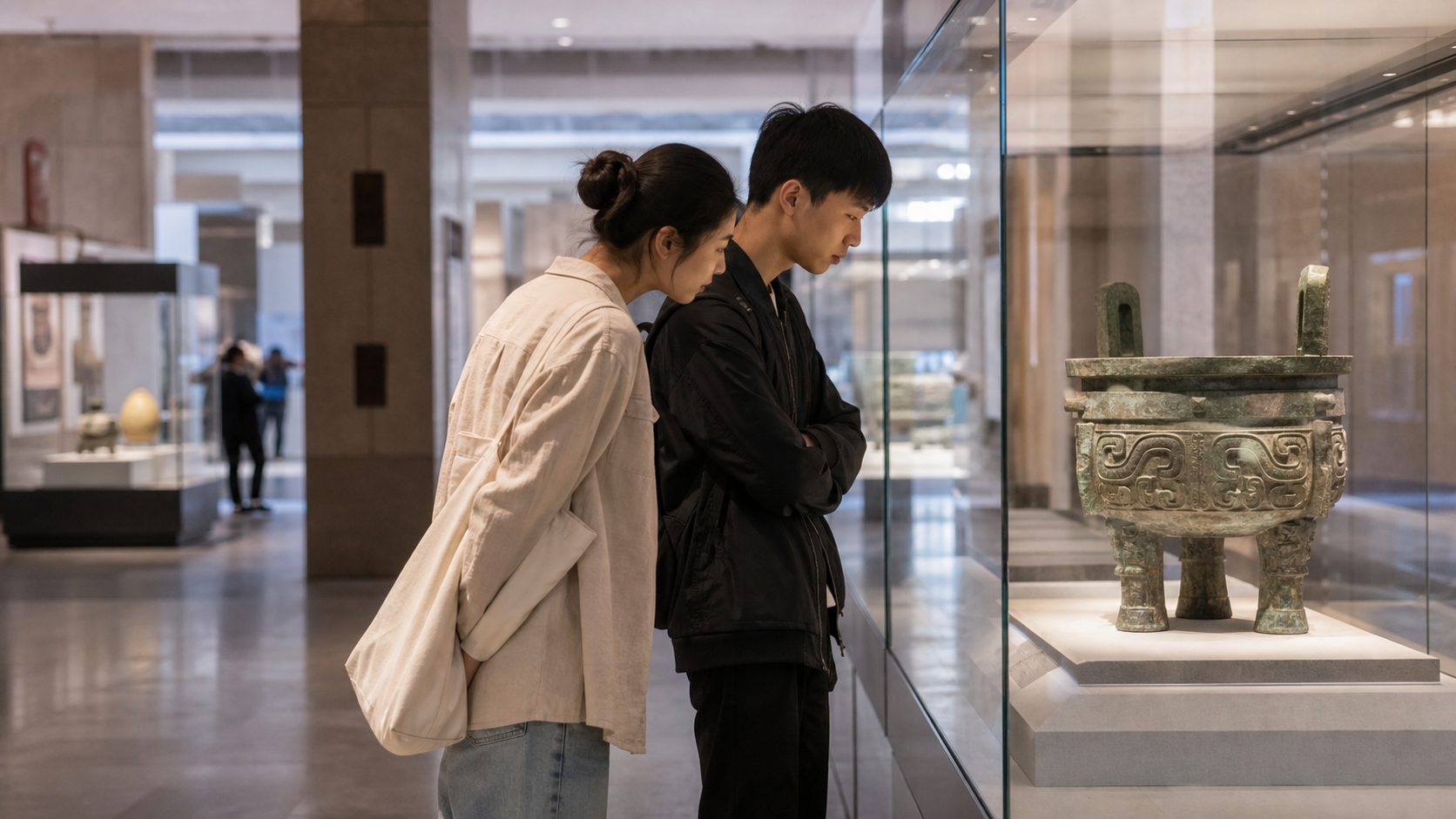
Booking an entrance ticket, taking photos in front of a display case, and then having coffee nearby has become a weekend plan for many young people in China.
In China’s big cities, museums have become places for friends to meet, part of school courses, and destinations that young people visit specifically for temporary exhibitions. On social media, bronze vessels, ancient paintings, and excavated objects in display cases become short videos. Some exhibitions fill their reservation slots quickly, which in turn makes more people curious.
The trend should not be reduced to young people’s love of “checking in.” Taking photos is part of a visit, but it also lets people preserve and share a brief moment of looking. More importantly, museums turn abstract history into objects that can be observed. The wear on a coin, the colour of a piece of pottery, or the scale of a painting may all correct what people imagined about the past.
Why objects can make a stronger impression than textbooks
Textbooks provide timelines and conclusions; museums provide scale, materials, and distance. Knowing that a bronze vessel is heavy is one thing. Standing in front of a large object and seeing its thickness and traces of casting is another. Foreign visitors often have a similar experience: even without knowing the names of Chinese dynasties, they can begin with an object’s craftsmanship, use, and state of preservation.
Permanent galleries in large museums usually help visitors build a basic map. The National Museum of China’s “Ancient China” exhibition places different historical periods in one narrative, allowing visitors to see how objects, writing, cities, and institutions were connected. Temporary exhibitions offer more focused subjects that are easier to explore in depth, such as archaeological discoveries from one region, a particular craft, or one artist’s work. Both matter. Without a permanent gallery, first-time visitors have trouble finding their bearings; without temporary exhibitions, familiar visitors may lose a reason to return.
Why are young people willing to queue and make reservations?
Museums are becoming an active choice for many visitors, and school trips are only one reason for going. The National Museum of China’s 2024 annual report said that it opened for 317 days and received about 6.957 million visits. Visitors aged 19 to 35 made up 42.29 percent, while those under 35 accounted for more than 60 percent. This age profile shows that young people are already a major audience for large public museums, rather than merely parents accompanying children.
Reservation systems have also changed the rhythm of a visit. Popular museums limit visitor numbers and use reservations and staggered entry, so people have to plan ahead. For visitors from elsewhere, a museum is no longer something to see while passing through; it becomes part of an itinerary that includes transport, accommodation, and other sights. For local residents, making a reservation makes a museum visit feel more like attending a performance: first choose the date, then decide whether to see a permanent gallery or a temporary exhibition.
Social media has a double effect here. Short videos give unfamiliar objects a second life, allowing young people to be drawn in by one exhibit and then look up its date and use. At the same time, a popular exhibition can be compressed into a few “must-take” angles, and visitors may search only for the most postable image. Good museum education needs to bring attention back from “What did I photograph?” to “How was this object used, preserved, and interpreted?”
Museums are changing how they communicate
Exhibitions today pay more attention to labels, interactive guides, and services for children and families. Digital guides can offer several languages, touchscreens can show details or reconstruction processes, and guides can help visitors place an object back into its historical context. Technology lowers the barrier to understanding and gives people from different backgrounds a way in.
Young visitors’ participation also affects the subjects museums choose. Cultural and creative products, evening opening hours, public lectures, and livestreams turn museums from places people simply leave after looking into cultural spaces they can revisit. Foreign readers do not need to master all of Chinese history before visiting a museum in China. They can choose one object that interests them, start with its material, use, and excavation site, and then use the label to unfold its date and background.
Young Chinese people entering museums does not mean that they all accept one version of history. Some are interested in craftsmanship, some in aesthetics, some in archaeological sites, and some simply want a quiet afternoon in the city. A museum’s value lies in offering a shared experience of looking among these different motivations. As long as objects are carefully preserved and accurately explained, and people are still willing to stop in front of a display case, a museum will not be merely a warehouse for the past.
https://www.youtube.com/watch?v=ejnqibez8i8&t=3431s
References
- Data Report of the National Museum of China (2024) - Many Young People Are Coming to Museums (Xinhua) - Why Young People Have Fallen in Love with Museums (China Central Television)

Peng Jinsui
I explore Chinese society, culture, travel, business, and language learning while studying Spanish and experimenting with AI and interactive products. I’m also open to helping people and organizations overseas better understand China, connect with local resources, and address practical needs.
Peng Jinsui