
Why Is China’s Food Security More Than an Agricultural Issue?
Behind a bowl of rice are farmland, water, seeds, logistics, reserves, farmers’ incomes, and international markets.
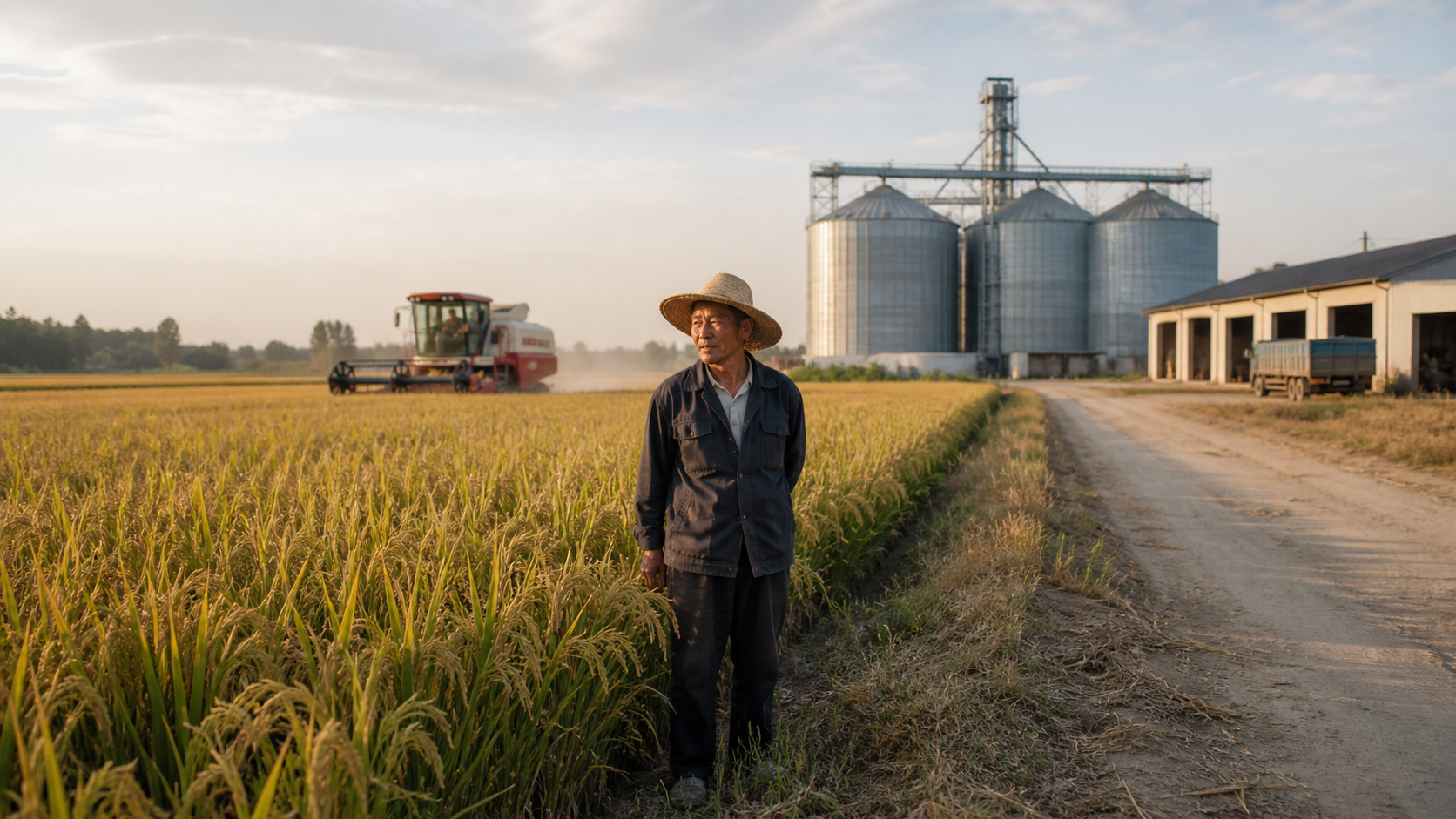
Behind a bowl of rice are farmland, water, seeds, logistics, reserves, farmers’ incomes, and international markets.
When China talks about food security, it is considering much more than how much grain is harvested from fields this year. A populous country also has to ask whether food can move from producing areas to consumers, whether reserves are available after a disaster, whether farmers are willing to keep farming, whether feed and cooking-oil supplies are stable, and whether fluctuations in international markets could affect domestic life. For ordinary people, food security often appears as stable prices, quality, and supply.
In statistical and policy contexts, China’s “grain” usually includes cereals, beans, and tubers. People’s diets also include vegetables, fruit, meat, eggs, dairy, and aquatic products. Basic self-sufficiency in cereals is not the same as avoiding imports of every agricultural product. China can secure staple-grain supplies while still using international trade to supplement soybeans, oilseeds, and other products. This distinction helps prevent food security from being mistaken for complete closure.
Why output is only the first threshold
China’s total grain output passed a new threshold of 1.4 trillion jin in 2024. Data released by the National Bureau of Statistics for 2025 showed that the country’s grain-sown area was about 1.791 billion mu and output per unit area was about 399 kilograms. Output data show agricultural production capacity, but they cannot answer where food comes from, who produces it, or how it moves in different seasons. A good harvest in one region does not mean that every place can buy grain at the same price and time.
China’s grain-producing regions and consumer regions do not fully overlap. The Northeast, North China, and the Yangtze River basin are important producing areas, while densely populated coastal cities are major consumers. Railways, roads, ports, grain warehouses, processing plants, and wholesale markets connect the two ends. The reserve system also acts here as a buffer between good harvests, disasters, and market fluctuations, while ensuring that grain can continue to move.
Agriculture is also affected by weather, water resources, and soil quality. Expanding the sown area is difficult, so further increases in output increasingly depend on yields, water-saving irrigation, improved varieties, farm machinery, and field management. Farmland water conservancy, protection of cultivated land, and agricultural technology together form the foundation of food security. If any link becomes unstable, production costs rise or the ability to withstand risks weakens.
Who farms the land determines whether supply can continue
China’s rural population continues to move, and many young people work in cities. The age and number of agricultural workers are changing. Food security is therefore also connected to whether farmers can earn a reasonable return. If grain-farming income remains below the income from outside work or other businesses for a long time, households may reduce investment, and land may be left uncultivated or shifted to other uses. Subsidies, insurance, minimum purchase prices, agricultural social services, and mechanization are policy tools for reducing the risks of farming grain.
The way agriculture is managed is changing too. Small farmers remain important, while family farms, farmers’ cooperatives, and specialized organizations that provide ploughing, planting, and harvesting services have emerged. Large-scale operation does not necessarily mean that one large company manages all the land. More often, farmers keep their land-use relationship and use machines and technology through entrusted services, leases, or cooperation. This can reduce the efficiency losses caused by fragmented land without turning rural life completely into a factory model.
Food security also includes food quality and nutrition. As consumers move from simply wanting enough to eat toward caring more about freshness, health, and variety, the relationship between production and consumption becomes more complex. China needs to protect supplies of wheat and rice, while also responding to changes in feed grain, oilseed, and meat supplies. International trade supplements these supplies, but diversified sources, domestic reserves, and processing capacity matter too, because global markets are affected by weather, conflict, energy, and transport costs.
Why this also matters to people in other countries
China is an important producer, consumer, and trading participant in global agricultural markets. China’s harvests, import demand, and changes in consumption can affect international markets for soybeans, corn, meat, and cooking oil. Foreign readers who reduce food security to whether China imports wheat miss the larger supply-chain relationship. Feed, oil, seeds, farm machinery, cold chains, and ports can connect producers and consumers in different countries.
At the same time, China’s food-security policies place the country within the global agricultural system. China imports some agricultural products and also uses international trade and agricultural cooperation to supplement domestic demand. Emphasizing domestic capacity is a way to retain the ability to manage risks in an open environment; it does not mean producing every kind of food at home. This balance changes with population, income, climate, and market prices.
China’s food security is therefore a long-term economic and governance issue. It requires protecting farmland and water resources while giving farmers an incentive to continue; improving technology and reserves while maintaining reasonable international trade; stabilizing prices while giving consumers access to safer and more varied food. Seeing these connections before the food reaches the table helps explain why China discusses agriculture, energy, logistics, public finance, and national risk together when it talks about food.
https://www.youtube.com/shorts/VqcRuRIz5w0
References
- National Bureau of Statistics Announcement on 2025 Grain Output - A New Grain Output Target of 1.4 Trillion Jin: What Is the Basis and How Can It Be Achieved? (China National Intellectual Property Administration) - Food Security in China (State Council Information Office)

Peng Jinsui
I explore Chinese society, culture, travel, business, and language learning while studying Spanish and experimenting with AI and interactive products. I’m also open to helping people and organizations overseas better understand China, connect with local resources, and address practical needs.
Peng Jinsui